
Summer is the season of green lawns, sprinklers, and keeping the yard looking its best. But here’s something many homeowners never think about: your lawn irrigation habits can affect your septic system.
Most people know that what goes down the drain impacts a septic system. Fewer realize that what happens above ground can matter just as much. If your home has a septic drain field, the amount of water you put on your lawn can influence how well that system performs.
Your Lawn and Your Drain Field Need to Coexist
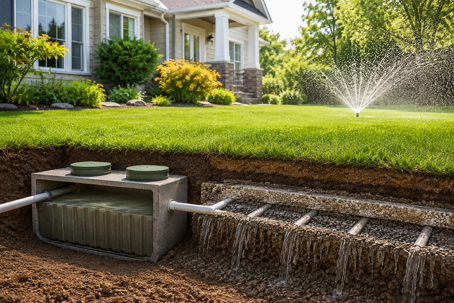
A septic drain field works by allowing wastewater to slowly move through soil, where natural processes help filter and treat it. For that to happen effectively, the soil needs the right balance of moisture and air.
During hot summer weather, it is common for homeowners to increase irrigation to keep grass healthy. The problem is that excessive watering can saturate the soil around the drain field. When the soil becomes too wet, it has a harder time absorbing and treating wastewater from the septic system.
In other words, your sprinkler system and your septic system may be competing for the same space in the soil.
What Happens When a Drain Field Gets Too Much Water?
When irrigation adds more water than the soil can comfortably handle, wastewater may not disperse as efficiently. This can put extra stress on the septic system and increase the risk of drainage problems.
Homeowners may notice:
Standing water near the drain field
Soggy areas that stay wet longer than the rest of the yard
Grass that looks unusually green or grows much faster over the drain field
Slow drains inside the home
Occasional septic odors outdoors
These signs do not always mean there is a major failure, but they can indicate that the drain field is receiving more water than it should.
Normal Watering vs. Overwatering
A healthy lawn needs water, and normal irrigation is not usually a problem. The issue is overwatering.
A good rule of thumb is that your lawn should receive enough water to support healthy grass growth without leaving the soil constantly saturated. If water is pooling, running off the surface, or leaving the ground soggy for long periods, the lawn is likely getting more water than it needs.
This becomes especially important during summer heat waves, when many homeowners increase irrigation frequency without considering the impact on the septic drain field.
Why Irrigation Should Be Directed Away From the Drain Field
In most cases, septic professionals recommend avoiding routine irrigation directly over the drain field whenever possible. The drain field already receives wastewater from the septic system, so adding large amounts of sprinkler water can reduce its ability to function efficiently.
If your irrigation system has adjustable zones, consider reducing watering frequency over the drain field area or directing sprinklers toward other parts of the lawn that can better handle the extra moisture.
Best Practices for a Healthy Lawn and a Healthy Septic System
The good news is that you do not have to choose between a nice lawn and a properly functioning septic system. A few simple habits can help protect both:
Water deeply but less frequently rather than using constant light irrigation
Avoid creating puddles or runoff over the drain field
Adjust sprinkler zones to minimize watering directly on the drain field
Watch for unusually wet or lush areas in the yard
Keep up with regular septic tank pumping and septic system maintenance
The Summer Takeaway
Summer lawn care and septic system care are more connected than many homeowners realize. Increasing irrigation may seem harmless, but excessive watering can create conditions that make it harder for your drain field to do its job.
If you notice standing water, soggy soil, or other warning signs around your drain field, it may be worth having your septic system inspected. At Wind River Environmental, we help homeowners with septic tank pumping, inspections, and septic system maintenance to keep everything working properly through every season.
A healthy lawn is great. A healthy lawn and a healthy septic system are even better.