

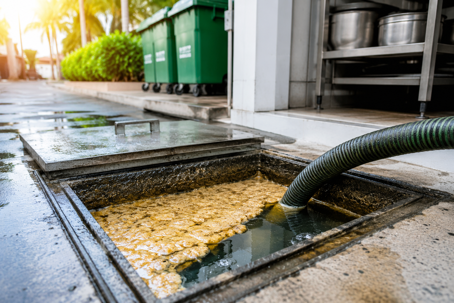
If you operate a restaurant, summer brings more than just warmer weather and busier kitchens. Rising temperatures can significantly affect grease trap performance, making summer grease trap maintenance an important part of keeping your plumbing system running smoothly.
Grease traps are designed to capture fats, oils, and grease (FOG) before they enter the sewer system. During the summer months, higher temperatures, increased kitchen activity, and seasonal storms can create additional challenges that require closer attention. Understanding these seasonal impacts can help prevent backups, unpleasant odors, and costly repairs.
Why Summer Heat Changes Grease Trap Performance
Outdoor grease traps are especially susceptible to temperature changes. During hot weather, grease remains in a more liquid state, which can make grease trap cleaning and pumping easier. However, there is a tradeoff.
As temperatures rise, the separation between grease and wastewater can become less effective. When grease stays suspended in liquid rather than floating to the top, it may be more likely to escape the trap and enter downstream plumbing or sewer systems.
Regular inspections and scheduled grease trap cleaning services can help ensure your system continues to operate as intended throughout the summer.
Increased Bacterial Growth and Odor Problems
Summer temperatures also accelerate the breakdown of food waste and organic material inside grease traps. As bacteria become more active, restaurants may notice stronger odors developing sooner after service.
Increased bacterial activity can also attract pests such as flies and yellow jackets, creating sanitation concerns around outdoor grease trap systems.
While some operators may consider adding chemicals or enzymes to combat odors, local regulations may restrict these treatments. Instead, the safest approach is often more frequent grease trap maintenance combined with proper kitchen practices.
Using heavy-duty sink strainers can help reduce the amount of food waste entering the system and minimize odor-causing buildup.
Busy Summer Seasons Mean More FOG
For many restaurants, summer is peak season. Tourism, outdoor dining, catering events, and increased customer traffic all contribute to higher volumes of food preparation.
More cooking means more fats, oils, and grease entering your wastewater system.
Restaurants that experience seasonal spikes in business should consider adjusting their grease trap cleaning schedule accordingly. A maintenance program that works during slower months may not provide enough capacity during the busiest times of the year.
Scheduling proactive grease trap pumping before peak demand periods can help prevent overflows, backups, and service interruptions.
How Stormwater Can Impact Grease Traps
Summer thunderstorms can create challenges for outdoor grease traps, particularly if they are located in areas prone to standing water or runoff.
Although properly installed grease traps should be sealed against rainwater intrusion, damaged lids, poor drainage, or improper placement can allow stormwater to enter the system.
Excess water can disrupt grease separation and reduce the trap's effectiveness. In some cases, diluted grease may pass through the system and enter municipal sewer lines, potentially resulting in blockages, violations, or fines.
Routine inspections can help identify cracked lids, damaged seals, and drainage issues before they become larger problems.
Preparing for Cooler Weather Starts Now
Summer maintenance can also make the transition into colder months easier. As temperatures drop, grease begins to cool and solidify more quickly, leading to thicker buildup inside the trap.
If excess grease has accumulated during the summer, colder weather can make it harder to remove and increase the risk of blockages. Staying current with scheduled grease trap cleaning throughout the year helps prevent hardened grease from reducing system capacity and performance.
Keep Your Grease Trap Running Smoothly Year-Round
Summer heat, increased kitchen activity, bacterial growth, and seasonal storms can all place additional stress on restaurant grease traps. A proactive maintenance plan helps reduce odors, prevent backups, protect plumbing infrastructure, and support regulatory compliance.
Wind River Environmental provides professional grease trap cleaning, pumping, and maintenance services for restaurants, commercial kitchens, and food service facilities throughout the Northeast. Whether you need routine service or help addressing a grease trap issue, our team can help keep your operation running smoothly all year long.
Contact Wind River Environmental today to schedule grease trap service and prepare your system for the demands of summer.