
Septic Tank Location: What You Need to Know
You need to know the location of your septic tank for several reasons.
For instance, when your tank is clogged or sewage is coming back up your drains, time is of the essence. Knowing where your septic tank is located is crucial for maintenance and to ensure nothing interferes with its operation.
How to Find Your Septic Tank
We can start by helping you know where your septic tank isn't located. It shouldn't be near and in-ground structures like pools, decks, patios, and even trees, gardens, and sheds. Hopefully, that narrows it down some.
Here are several methods for finding your septic tank:
- Review Home/Property Plans. First, you could look at the records for your home and see the plans from when it was installed.
- Find Septic Inspection Paperwork. You can also try your inspection paperwork if you have it. If the information is outdated, you may want to get an updated check from a licensed professional.
- Call Your County. Call your county and ask for your septic tank's location.
- Look for a Dead Patch of Grass. The most likely scenario is an open patch of grass.
- Call a Septic Company. When in doubt, get a local septic company to find the tank for you. They will know exactly where it is when you need it pumped out or repaired. Professionals use both metal probes and electronic monitoring devices to locate your septic tank.
If you choose us to help locate or pump your septic tank, we’ll document its exact location and keep a service history on file for future visits.
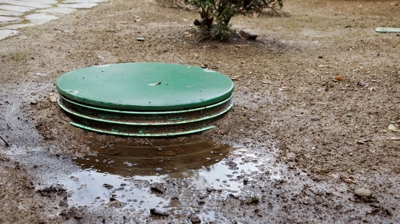
We can also install access risers, making it easy to find your septic tank going forward.
Where to Place Your Septic Tank
If you’re switching to a septic tank, you may be wondering where in the world it should go, or if you already have one, how to tell where it is. don’t want to plant a tree and then have the roots destroy your drain field.
You have some leeway over where to place your septic tank, but much of the decision is based on local regulations, your property composition, and ease of access. Septic tanks are buried underground, so there needs to be a section of your home outside that is free of obstructions in order to safely place the tank underground.
The size of the space needed will usually correlate with the size of your home. There also needs to be deep enough soil. When placing a septic tank, your local plumbing company will determine the best location to allow for optimal performance and the ability for maintenance.
Tips for Septic Tank Care
We love giving tips on how to maintain your septic tank from the inside, but how about the outside? There are also ways to maximize safety and performance from your septic that don’t have to do with your drains.
First, make sure your septic tank is in an open area, whether you’re installing it or it was already installed when you bought your home. That means to ensure it’s in a space away from trees, bushes, gardens, decks, pools, patios, and more.
Most of these obstructions shouldn’t be a problem if the tank was installed according to conventional standards and regulations. But it’s also a warning for any future projects or additions to your yard that they are placed at a safe distance from your septic tank.
Also, don’t try to work on your septic tank without professional help. This could lead to further damage and leak contaminated sewage into the ground.
Gold Standard Septic Service
Wind River Environmental is a full-service plumbing and septic company that is here for all your septic system needs. From locating your tank to regular pumps, to repair and installation, we do it all.
Contact us today at (877) 560-9007 for more information and to make an appointment!

.2510010813018.png)