

Spring Snowmelt and Your Septic System: What Homeowners Should Know
When winter starts to loosen its grip in northern states, melting snow can feel like a welcome change. Warmer days and shrinking snowbanks signal that spring is on the way. But all that melting snow brings a large amount of water with it, and that extra water can affect your septic system in ways many homeowners don’t expect.
It’s good to understand how snowmelt can impact septic system performance and what warning signs to watch out for during the thaw.
How Melting Snow Can Affect Your Septic System
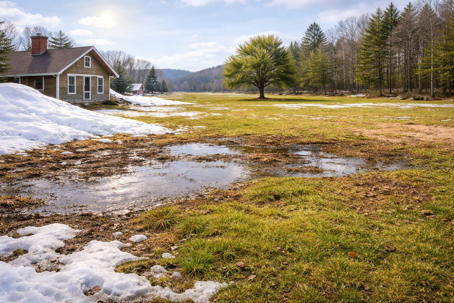
During the winter, snow gradually accumulates across your yard. When temperatures rise, the snow melts and releases a significant amount of water into the soil over a short period of time. In northern climates, this can saturate the ground and raise the local water table.
Septic systems rely on the surrounding soil in the drainfield to filter and absorb wastewater. When the soil becomes overly saturated from melting snow, it may not be able to absorb wastewater as efficiently. This can slow drainage, place additional pressure on your septic tank, and sometimes lead to wastewater backing up toward the home.
Snow (and melting snow) amounts vary year to year, but in winters with significant snowfall, this can be more extreme.
Common Septic Problems During Snowmelt
In some cases, groundwater can seep into the septic tank itself, reducing the tank’s capacity and disrupting how solids and liquids separate. Older systems or systems that are overdue for septic tank pumping may be especially vulnerable during the spring thaw.
Homeowners may notice standing water near the drainfield, plumbing backups, or other signs that the septic system is under stress.
Warning Signs Your Septic System May Be Affected
As snow begins to melt, keep an eye out for signs that your septic system may need attention. Slow draining sinks, gurgling sounds in your plumbing, or unpleasant odors from drains can all indicate a potential issue.
You may also notice soggy areas in your yard near the drainfield. Grass in those spots may appear greener or grow faster than the surrounding lawn. If you notice these warning signs during periods of heavy snowmelt, it may be time to schedule professional septic service.
What You Can Do During Spring Thaw
While homeowners cannot control how quickly snow melts, there are a few simple steps that can help reduce stress on your septic system.
Limiting heavy water use during peak snowmelt gives your system more time to process wastewater. Spacing out laundry loads and avoiding unnecessary water use can make a difference. It is also important to keep vehicles and heavy equipment off the drainfield when the ground is saturated.
Spring Thaw Septic System Checklist
Use this handy checklist to help protect your septic system during periods of heavy snowmelt:
- Watch for slow drains or gurgling sounds in your plumbing
- Look for wet or soggy areas near your drainfield
- Spread out laundry loads to reduce system strain
- Limit heavy water use during peak snowmelt
- Keep vehicles and heavy equipment off the drainfield
- Schedule septic service if warning signs appear
How Wind River Environmental Can Help
If melting snow has you concerned about your septic system, professional septic service can help identify potential issues early. Technicians can inspect your septic tank, evaluate drainfield conditions, and recommend maintenance such as septic tank pumping if needed.
At Wind River Environmental, we help homeowners across northern regions keep their septic systems working properly through every season. Whether you are noticing warning signs or simply want peace of mind during spring thaw, our team is here to help.
Scheduling septic system maintenance before small problems grow larger can save time, money, and frustration while keeping your system running smoothly.